Your Delivery Address Knows More About You Than Your Bank Does
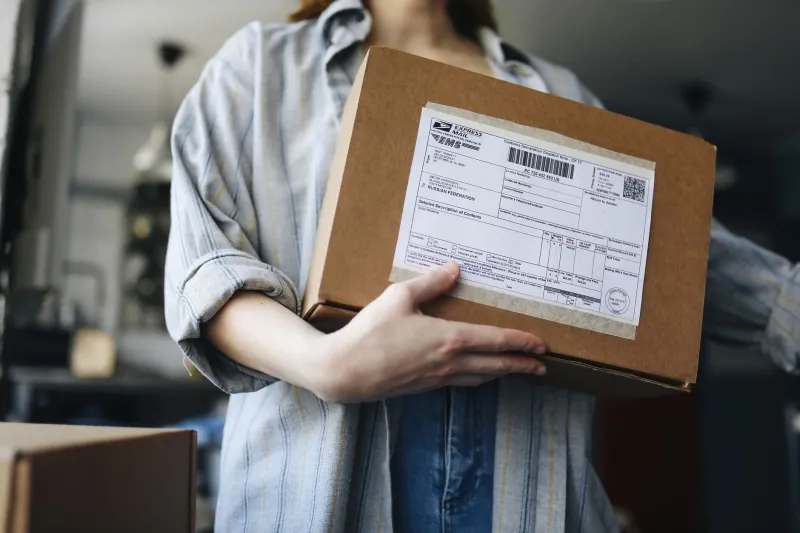
You've probably spent a decent amount of time worrying about your credit card number falling into the wrong hands. You use strong passwords, you check for the little padlock icon in your browser, maybe you even have a dedicated virtual card for online shopping. Smart moves, all of them. But here's the thing — while you've been guarding your sixteen-digit card number like it's Fort Knox, you've been casually handing out something arguably more revealing with every single order you place.
Your shipping address.
It sounds almost laughably mundane. Just a street number and a ZIP code, right? Turns out, that little block of text is a goldmine — and an entire industry has quietly built itself around extracting every last drop of value from it.
Why an Address Beats a Card Number
Credit card data is valuable, sure, but it's also volatile. Numbers get stolen, cards get cancelled, fraud alerts get triggered. Banks have entire departments dedicated to making that data useless to bad actors within hours of a breach.
Your home address, on the other hand, doesn't change very often. The average American moves about 11 times in their lifetime — which means for years at a stretch, that address is a stable, reliable anchor point that third parties can use to build a remarkably detailed picture of who you are.
"A shipping address is a persistent identifier in a way that a credit card number simply isn't," says one digital privacy consultant who works with consumer advocacy groups. "It ties your online behavior to a physical location, and from there, the inferences that can be drawn are almost limitless."
Think about what your address reveals beyond just where you sleep at night. It signals your approximate income bracket, your likely household size, your proximity to certain schools or employers, your neighborhood's demographic profile, and your access to services. All of that gets layered on top of your purchase history to create what data brokers call a "consumer profile" — a dossier that gets bought, sold, and rented across an entire shadow economy.
How Marketplaces and Sellers Use Location Data
Here's where things get interesting — and a little uncomfortable — for regular shoppers.
When you place an order on a large online marketplace, your shipping address doesn't just go to the shipping carrier. Depending on the platform's terms of service, it can also be shared with the third-party seller fulfilling your order. And many of those sellers are doing a lot more with that information than just printing a label.
Sellers operating across multiple platforms routinely compile address data to identify high-value geographic markets. If orders from a particular ZIP code consistently result in fewer returns, higher average cart values, or repeat purchases, that ZIP code becomes a priority target for advertising spend and promotional pricing.
Flip that around, and the same logic works in reverse. Shoppers in certain regions — particularly rural areas or lower-income ZIP codes — have reported seeing consistently higher prices for identical products compared to shoppers in wealthier urban neighborhoods. This practice, sometimes called "geographic price discrimination," isn't illegal in most cases, but it's rarely disclosed.
"Sellers know that someone in a high-cost-of-living area is probably less price-sensitive," explains a former e-commerce analyst who spent years working with marketplace vendors. "So they price accordingly. Your ZIP code is essentially telling the algorithm how much you're willing to pay."
The Data Broker Pipeline
Beyond the marketplace ecosystem itself, there's a second layer of address monetization that most consumers never see: the data broker industry.
Data brokers are companies that collect, aggregate, and resell consumer information. They pull from dozens of sources — public records, loyalty programs, app permissions, and yes, purchase and shipping data — to build profiles that get sold to advertisers, insurers, employers, and political campaigns.
Your shipping address is one of the most valuable pieces of data a broker can have, because it acts as a linking key. It connects your online shopping behavior to your offline life in ways that an email address or even a phone number can't quite match.
Privacy advocates point out that most consumers agree to this data sharing without realizing it. Buried in the terms of service for virtually every major shopping platform is language that permits the sharing of "order information" — which typically includes your shipping address — with "trusted partners" or "affiliated companies." The language is vague by design.
"People read 'we may share your information with partners' and think it means maybe a couple of companies," says one consumer privacy advocate based in Washington, D.C. "In reality, that data can pass through dozens of hands before it's ever used to target you with an ad."
Geographic Targeting and the Price You Pay
The price discrimination angle deserves a closer look, because it's the most direct way that address data hits shoppers in the wallet.
Researchers studying major e-commerce platforms have found statistically significant price differences for identical products based solely on the buyer's location. The differences aren't always massive — sometimes just a few dollars — but they compound across an entire shopping cart and across years of purchasing behavior.
Some of this variation is legitimate. Shipping costs genuinely differ by region, and some local taxes affect final prices. But researchers have documented price differences that can't be explained by logistics alone, suggesting that location-based demand modeling is baked into how some sellers set their prices.
The irony is that shoppers who use price comparison tools are mostly comparing prices at a single point in time from a single location. They don't see how that same product is priced for someone two states over.
What You Can Actually Do About It
Okay, so this is all a bit unsettling. The good news is that you're not entirely powerless. Here are some practical moves that privacy advocates recommend:
Use a P.O. Box or mail forwarding service. Services like a UPS Store mailbox or a mail forwarding provider give you a mailing address that isn't your home. It's an extra step, but it breaks the direct link between your purchases and your physical location.
Check your platform's data sharing settings. Most major marketplaces now offer some form of privacy dashboard where you can opt out of certain types of data sharing. It won't cover everything, but it limits the pipeline.
Use a VPN when browsing. A VPN masks your IP address, which platforms use to infer your location even before you enter a shipping address. Browsing from a different apparent location can sometimes surface different prices.
Shop as a guest when possible. Creating an account ties all your orders — and all your addresses — to a persistent profile. Guest checkout limits the data that can be linked across sessions.
Request your data. Under laws like the California Consumer Privacy Act (CCPA), California residents can request to see what data a company holds on them and ask for it to be deleted. Even if you're not in California, some companies honor similar requests nationally.
Rotate your payment and shipping details. Using virtual card numbers (most major banks offer these) alongside a P.O. Box makes it significantly harder to build a stable profile around your identity.
The Bigger Picture
None of this is meant to make you paranoid about clicking "place order" on your next purchase. Online shopping is genuinely convenient, and the vast majority of transactions are straightforward. But it's worth understanding that the checkout form you fill out every time you shop is doing a lot more work than just telling the delivery driver where to drop your package.
Your address is a data point in a much larger system — one that influences the prices you see, the ads that follow you around the internet, and the consumer profile that gets quietly built around your habits and your neighborhood. Knowing that gives you a little more power to push back.
And honestly, that's worth more than any flash sale discount you'll ever find.