In Stock, Out of Luck: The Dirty Secret Behind Online Availability Labels
You've been there. You spot the item you need, maybe a specific router, a pair of sneakers in your size, or a birthday gift you've been hunting for weeks. The listing says In Stock. You add it to your cart. You check out. You feel good about yourself.
Then the email arrives. "We're sorry to inform you that your order has been cancelled." Or worse — nothing arrives at all, and you're left refreshing a tracking page that hasn't updated in nine days.
Welcome to the ghost inventory problem, one of the most quietly infuriating realities of modern online shopping.
What 'In Stock' Actually Means (Hint: Less Than You Think)
Here's the thing nobody tells you upfront: that green "In Stock" badge on a product listing is often more of a suggestion than a guarantee. Marketplace platforms — the big ones you use every day — are pulling inventory data from a patchwork of sources: their own warehouses, third-party sellers, regional distribution centers, and sometimes even supplier feeds that haven't been updated since Tuesday.
The technical term floating around logistics circles is "inventory latency" — the gap between when a product actually sells out and when the website catches up to that reality. On a slow Tuesday afternoon, that lag might be a few minutes. During a major sale event, a viral product moment, or a supply chain hiccup? That gap can stretch into hours. And during those hours, thousands of shoppers can "buy" an item that doesn't actually exist.
Third-party sellers make this even messier. A seller listing products on multiple platforms simultaneously — say, their own website, a major marketplace, and a couple of smaller storefronts — is essentially juggling inventory across all of them manually or through software that syncs on a delay. When something sells out fast on one channel, the other channels don't always know immediately.
The Warehouse Reality Nobody Talks About
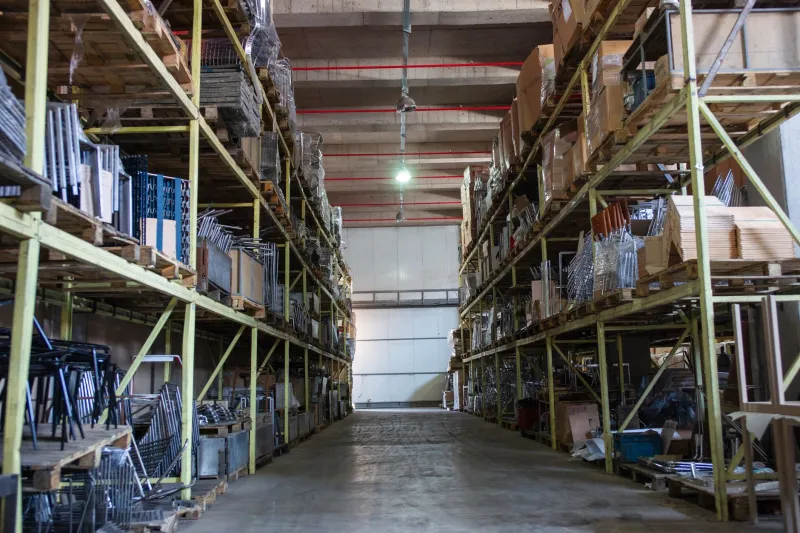
Even when a retailer controls its own inventory, the story isn't clean. Large fulfillment operations spread stock across multiple warehouses — sometimes dozens of them spread across the country. An item might technically exist in the system, but the unit sitting in a New Jersey warehouse is damaged, the ones in Texas are reserved for a wholesale order, and the Phoenix location ran out last week.
The website, however, just sees: units available. In stock. Buy now.
This is how you end up with orders that get cancelled days after purchase, or shipments that drag on for three weeks because the item has to be transferred between facilities before it can actually head your way. The "In Stock, Ships in 1-2 Days" promise quietly becomes "In Stock, Ships When We Figure This Out."
Why Cancellations Happen After You've Already Paid
Post-purchase cancellations feel like a betrayal, and honestly, they kind of are — even if they're not always intentional. When you complete a transaction, most platforms don't hard-lock that inventory to your order instantly. There's a brief processing window where the same item can technically still be purchased by someone else or get flagged as unavailable by a warehouse scan.
For third-party sellers, the situation is even shakier. Some smaller sellers are essentially drop-shipping — they don't hold the product at all. They're relying on a supplier to have it ready when an order comes in. If that supplier is out, your order disappears, often with a vague apology and a refund that takes five to seven business days to clear.
Red Flags to Watch Before You Buy
So how do you shop smarter when the "In Stock" label can't be trusted at face value? A few tactics actually help.
Check the seller's fulfillment history. On major marketplaces, third-party sellers often have ratings that include fulfillment reliability. A seller with a pattern of late shipments or cancellations is waving a red flag even if the listing looks fine.
Look for "Fulfilled by [Retailer]" vs. third-party fulfilled. When the platform's own logistics arm is handling fulfillment, inventory tends to be more accurately tracked. Third-party fulfilled orders carry more uncertainty.
Search for the item across multiple platforms. If something shows "In Stock" on one site but is listed as "Backordered" or unavailable on three others, that first site might just be slow to update. Cross-referencing takes two minutes and can save you a week of frustration.
Call it out in the cart. Some platforms show a more specific inventory count when you're in the checkout flow — things like "Only 3 left" or "Usually ships within X days." Vague language like "In Stock" with no shipping estimate is a yellow flag worth noting.
Use in-store pickup when available. If a retailer has physical locations and offers buy-online-pickup-in-store, that option is usually tied to real-time store inventory rather than a warehouse system. It's not foolproof, but it's often more accurate.
Avoid ordering time-sensitive items during peak periods. Sale events, holiday shopping windows, and viral product moments are exactly when inventory systems get overwhelmed. If you absolutely need something by a specific date, ordering during a quieter window — or paying for expedited shipping with a guarantee — is worth considering.
What Retailers Could Do (But Often Don't)
The frustrating part is that this isn't some unsolvable technical mystery. Real-time inventory visibility exists. Some retailers have invested in it heavily and their availability labels are genuinely reliable. Others are running on outdated systems or simply haven't prioritized the fix because cancellations are, from their end, just a customer service issue — not a revenue crisis.
Consumers, meanwhile, absorb the cost in wasted time, delayed plans, and the hassle of hunting down refunds. There's been growing noise in retail and logistics circles about standardizing availability disclosures — being more transparent when stock is low, when fulfillment timelines are uncertain, or when a listing is dependent on a third-party supplier. Whether that pressure translates into real change is another story.
Shopping Smarter in a System That Isn't Built for You
Until the system improves, the burden falls on shoppers to read between the lines. That green "In Stock" badge is a starting point, not a promise. Treating it as anything more is how you end up cancelling dinner reservations because your package didn't arrive.
The good news is that a little skepticism and a few extra steps before checkout can dramatically reduce the odds of getting burned. Check the seller, cross-reference availability, understand who's actually fulfilling your order, and give yourself extra buffer time whenever possible.
Ghost inventory is real, it's widespread, and it's not going away anytime soon. But shoppers who know what to look for can navigate around it — and save themselves a whole lot of frustration in the process.